Low-Divide (Smart Divide) Sinks: Do They Splash Water Across the Bridge?
Low-Divide (Smart Divide) Sinks: Do They Splash Water Across the Bridge The short answer is yes, they can splash, but usually no more than a standard sink if you manage your water flow correctly. These specialized fixtures feature a central wall that sits significantly lower than the rim of the basins. By dropping this barrier, manufacturers provide the convenience of a double–bowl setup with the internal space of a single-bowl unit.
Many homeowners worry about the bridge acting as a spillway for errant droplets. Understanding how these basins function helps you decide if the trade-off is worth the improved utility in your kitchen.
The Mechanics of Low-Divide Sink Splash
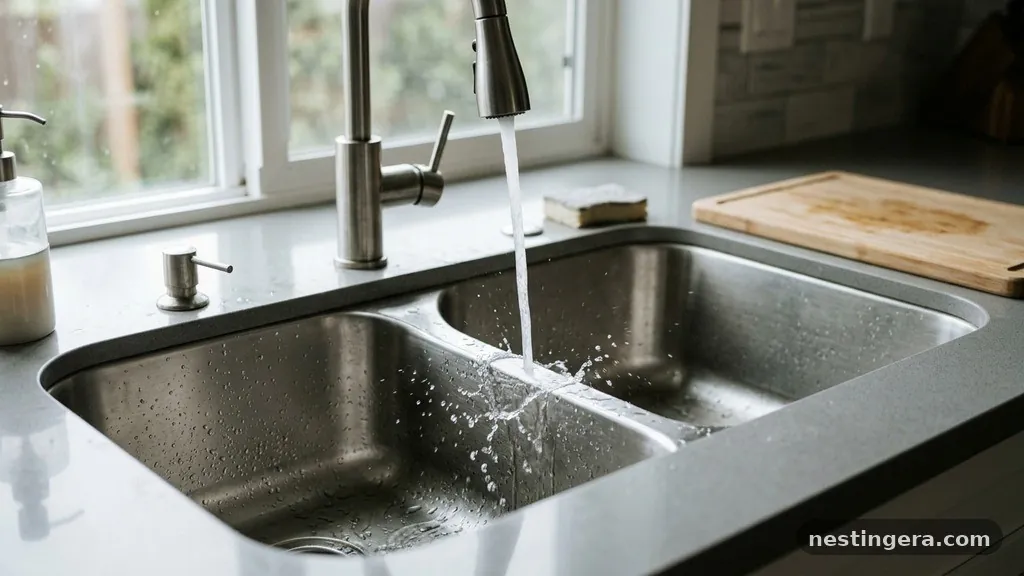
The primary concern with a low-divide basin is whether water will jump the center wall during routine tasks. Because the divider sits roughly 4 to 6 inches below the top of the sink, there is an open gap.
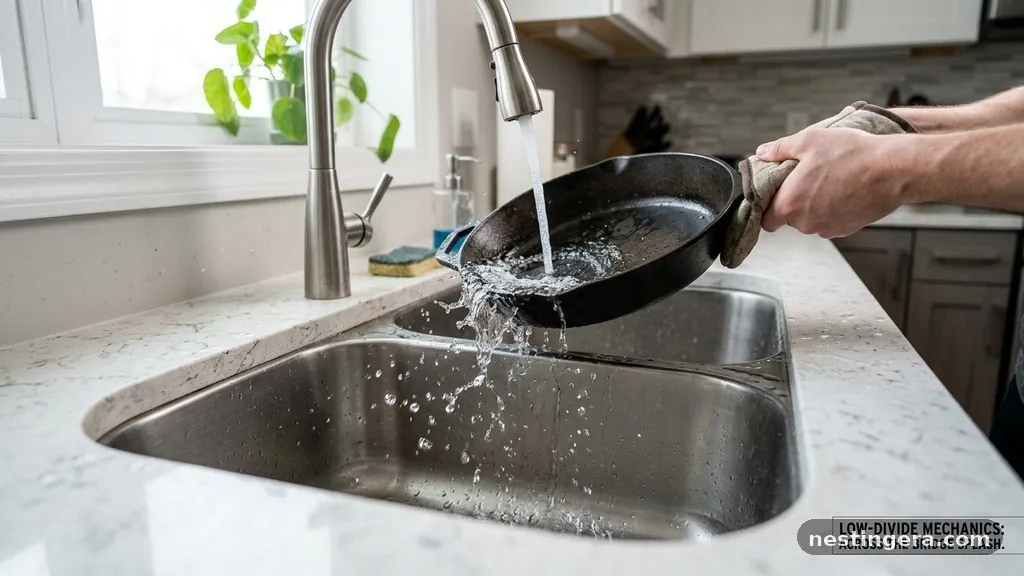
When you have a high-arc faucet, the force of the water hitting a plate or a pot can cause spray to travel horizontally. This spray can indeed clear the low barrier if the object you are washing is positioned directly over the center.
Most modern designs account for this by incorporating a slight slope in the divider’s top edge or using materials that discourage water pooling. If you are washing a large roasting pan that spans both sides, the divider acts as a support rather than an obstruction.
You can rest the pan on the center wall while scrubbing, which actually reduces the amount of water you need to pull from the faucet. The splash potential is largely a result of user technique rather than a fundamental flaw in the product.
Advantages of the Smart Divide Design
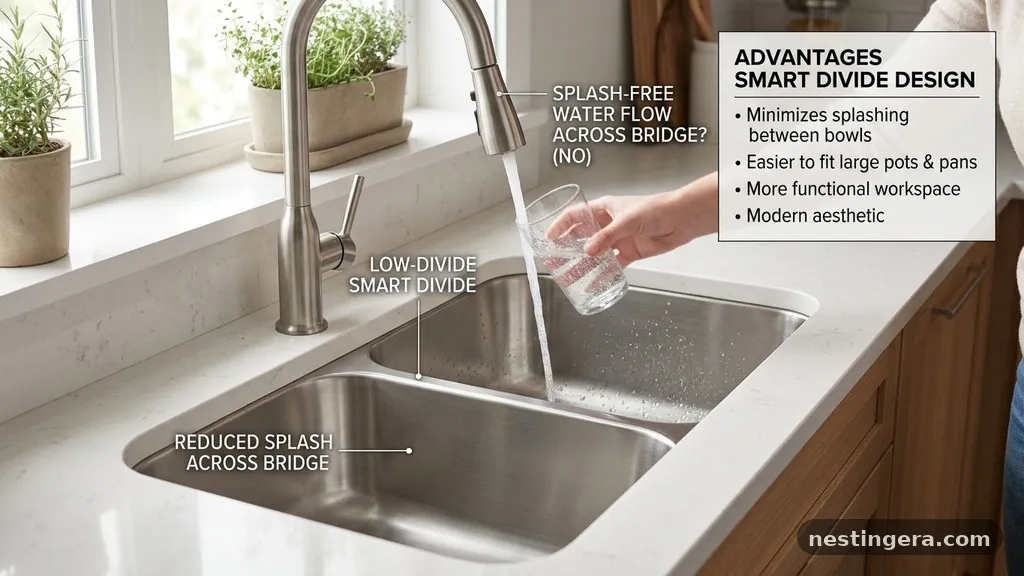
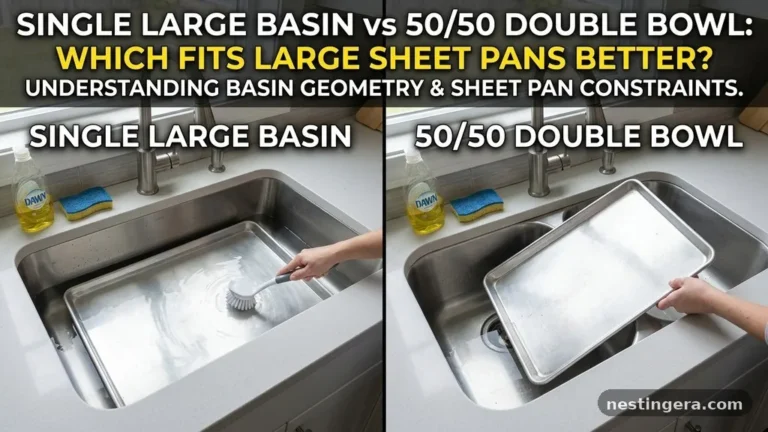
The primary benefit of choosing a low-divide model is the sheer flexibility it offers for cleaning oversized items. Standard double-bowl sinks often struggle with large baking sheets or bulky pots because the high divider prevents the object from sitting flat.
With a lower bridge, you can soak a large pan in one side while still having space for a dish rack or soapy water in the other. This hybrid approach captures the best of both worlds.
Another advantage is the ability to use the entire sink as a single basin when needed. By filling both sides to the level of the divider, you gain a massive footprint for soaking linens or large grilling grates.
This setup works exceptionally well for households that frequently entertain or cook from scratch. You aren’t constantly fighting the hardware to fit your cookware into the available space.
Comparing Sink Configurations
Understanding how these basins stack up against traditional options requires looking at the total volume and usability. A standard double-bowl sink offers distinct separation, which is great for keeping raw meat preparation away from clean dishes.
However, it often sacrifices the ability to submerge long handles. A single-bowl sink offers maximum space but lacks a way to separate tasks without a plastic bin.
| Sink Type | Space for Large Pots | Separation Ability | Splash Potential |
|---|---|---|---|
| Standard Double | Low | High | Low |
| Single Bowl | High | None | Low |
| Low-Divide | High | Moderate | Moderate |
The table above illustrates why many people settle on the low-divide style as a middle ground. While the splash potential is rated as moderate, it is rarely an issue for daily tasks like hand-washing glasses or rinsing vegetables.
You gain significantly more capacity for oversized items compared to a traditional double-bowl unit. Most users find that the minor risk of a splash is a small price to pay for the increased utility.
Managing Water Flow and Faucet Height
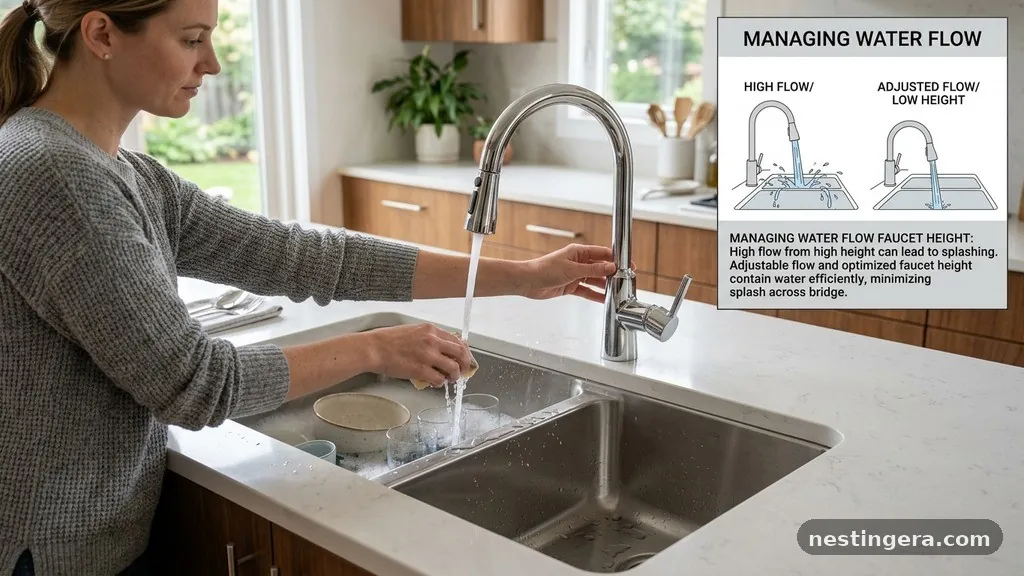
Your choice of faucet plays a massive role in whether your sink becomes a splash zone. A high-arc pull-down faucet is a common kitchen upgrade, but it can be problematic with a shallow divider.
If the faucet head is positioned too high, the water pressure creates a wider splash radius. When that water hits a flat surface like a plate, it scatters in all directions.
You can mitigate this by adjusting your faucet’s flow rate or using the pull-down feature to bring the sprayer closer to the sink floor. By keeping the nozzle closer to the items you are cleaning, you minimize the distance water travels before hitting a surface.
This technique prevents the spray from ever reaching the height of the bridge. Additionally, selecting a faucet with an aerated stream rather than a powerful spray setting can help keep water contained within the intended bowl.
Material Considerations for Daily Use
The material of your sink influences how water behaves and how easy it is to keep clean. Stainless steel is the most common choice, offering durability and a classic look that fits almost any home aesthetic.
However, stainless steel can be noisy if it isn’t properly insulated. Look for models that include sound-dampening pads on the underside to reduce the clatter of pots and the resonance of water hitting the metal.
Fireclay and composite granite are other popular options that offer a more solid, muted feel. These materials are often thicker than stainless steel, which can provide a more substantial barrier at the divider. Because they are less prone to oil-canning or flexing, they maintain their shape over time.
A solid divider is less likely to vibrate or deflect water in unpredictable ways. You can find more information on selecting durable kitchen materials through the National Kitchen & Bath Association for professional standards on installation and material longevity.
Installation and Mounting Styles
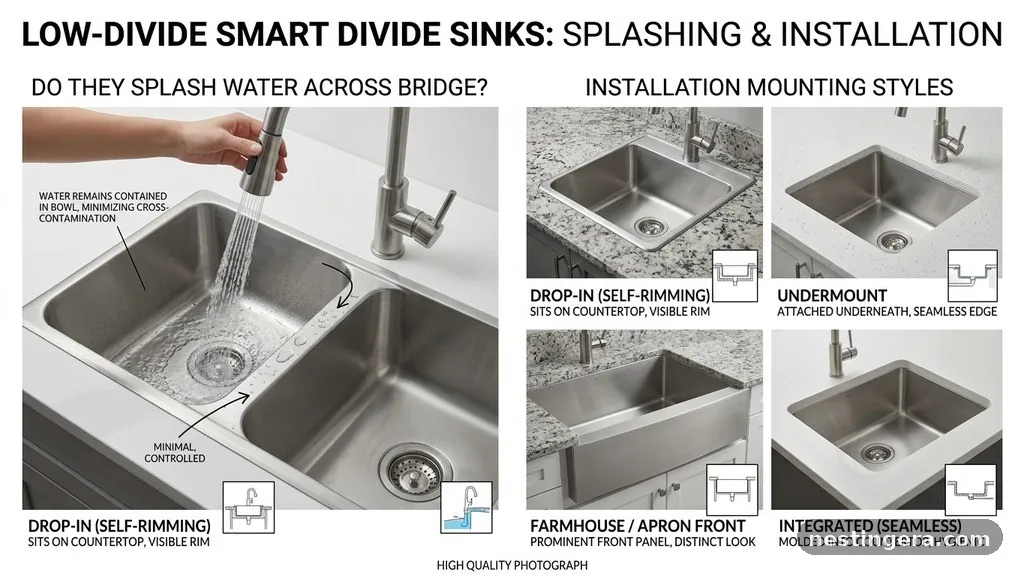
How you mount your sink can change your perception of the divide’s height. An undermount installation is the most popular choice for low-divide designs because it creates a seamless transition from the countertop to the sink.
Because there is no rim to catch debris, you can easily wipe water from the counter directly into the basin. This makes the sink feel like a cohesive unit rather than two separate holes in your stone.
Drop-in or top-mount sinks feature a rim that sits on top of the counter. While these are easier and cheaper to install, the rim can create a small ledge that collects grime.
If you choose a top-mount model, ensure the rim is thin so it doesn’t interfere with your ability to clean the surrounding area. The height of the divider remains the same regardless of the mounting style, but the overall ease of maintenance changes significantly.
Cleaning and Maintenance Tips
Maintaining a low-divide sink is generally straightforward, but it does require a slightly different approach than a single-bowl unit. Because the divider is exposed, it can accumulate soap scum or hard water deposits more quickly than the vertical walls of the basins.
Make sure to wipe the top of the bridge every time you clean the sink to prevent buildup. A soft sponge or a microfiber cloth is usually sufficient for daily maintenance.
If you notice water spots on the divider, a simple mixture of vinegar and water can help restore the finish. Avoid using abrasive steel wool pads, as these can scratch the surface and make it easier for grime to stick in the future.
For stainless steel models, wiping in the direction of the grain keeps the metal looking polished. Regular care ensures that your sink remains a highlight of your kitchen rather than a chore to maintain.
When to Choose a Single Bowl Instead
Sometimes a low-divide design isn’t the right fit for your specific lifestyle. If your primary goal is to have a dedicated space for soaking dishes that is completely isolated from your prep area, a traditional double-bowl sink is superior.
The low bridge does not provide the same level of containment as a full-height divider. If you are worried about soapy water spilling into the other side, you might find the compromise frustrating.
Conversely, if you almost exclusively use a dishwasher and only use the sink for hand-rinsing, a single-bowl sink is often the best choice. It provides the most room for large items and is the easiest to clean because there is no divider at all.
The decision often comes down to how often you physically wash items in the sink versus how often you use it as a landing pad for dirty dishes. Think about your workflow before committing to a specific layout.
Common User Questions
Does the low divider make it hard to wash tall pots?
Not at all; it actually makes it easier. Because the divider is low, you can tilt the pot or let the handle rest over the center, allowing the base to sit flat on the bottom of the sink. This provides better stability while scrubbing compared to a high-divide sink where the pot would have to be balanced on the edge.
Will the divider splash water onto my countertop?
If you are using a standard faucet correctly, the water should stay within the bowls. Splash generally occurs when water hits an object at an angle or with high force. By keeping your faucet nozzle low or using a gentle stream, you can prevent water from traveling over the bridge and onto your counters.
Is it harder to clean a low-divide sink than a single-bowl sink?
It requires slightly more attention to the center bridge, but it is not significantly more difficult. You have one extra surface to wipe down. Most people find that the added utility of having two basins outweighs the few seconds of extra cleaning required for the bridge.
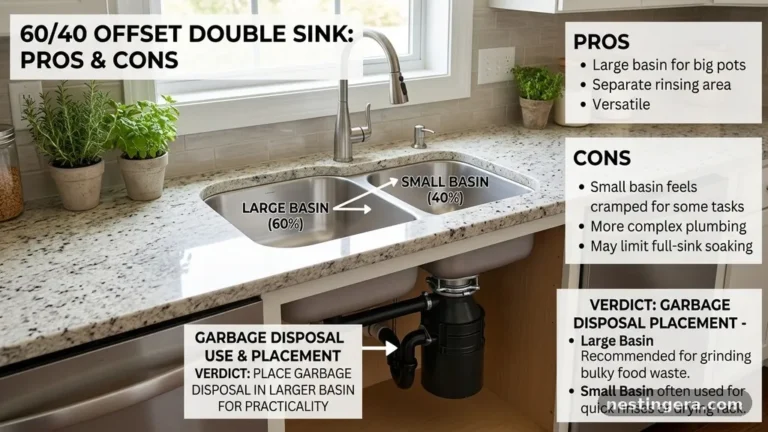
Can I install a garbage disposal on both sides?
Typically, a garbage disposal is installed on only one side of the sink. Because the divider is low, you can easily push food scraps from the non-disposal side into the disposal side. This is one of the hidden benefits of the design, as it keeps your prep area clean without needing two separate disposal units.
Are these sinks more expensive than standard models?
They are often priced competitively with standard double-bowl sinks, though the cost depends heavily on the material and brand. You aren’t paying a massive premium for the “smart” feature, but you should expect to pay more for high-quality stainless steel or composite materials regardless of the divider style.
Final Thoughts on Kitchen Utility
Selecting the right sink involves balancing your personal habits with the physical constraints of your kitchen. Low-Divide (Smart Divide) Sinks offer a versatile solution for those who want the separation of a double-bowl setup but need the capacity of a single-bowl basin. While they do have a higher splash potential than a full-divide model, this is easily managed through proper faucet selection and good cleaning habits.
Most homeowners who switch to this style find that the flexibility far outweighs any minor adjustments in technique. Whether you are scrubbing a large roasting pan or separating soapy water from a rinse area, these sinks adapt to your needs.
If you are ready to upgrade your kitchen, consider how this design might simplify your daily chores. A bit of research into the specific dimensions of your chosen model will ensure you get the best fit for your home.